
1Why this edition looks the way it does
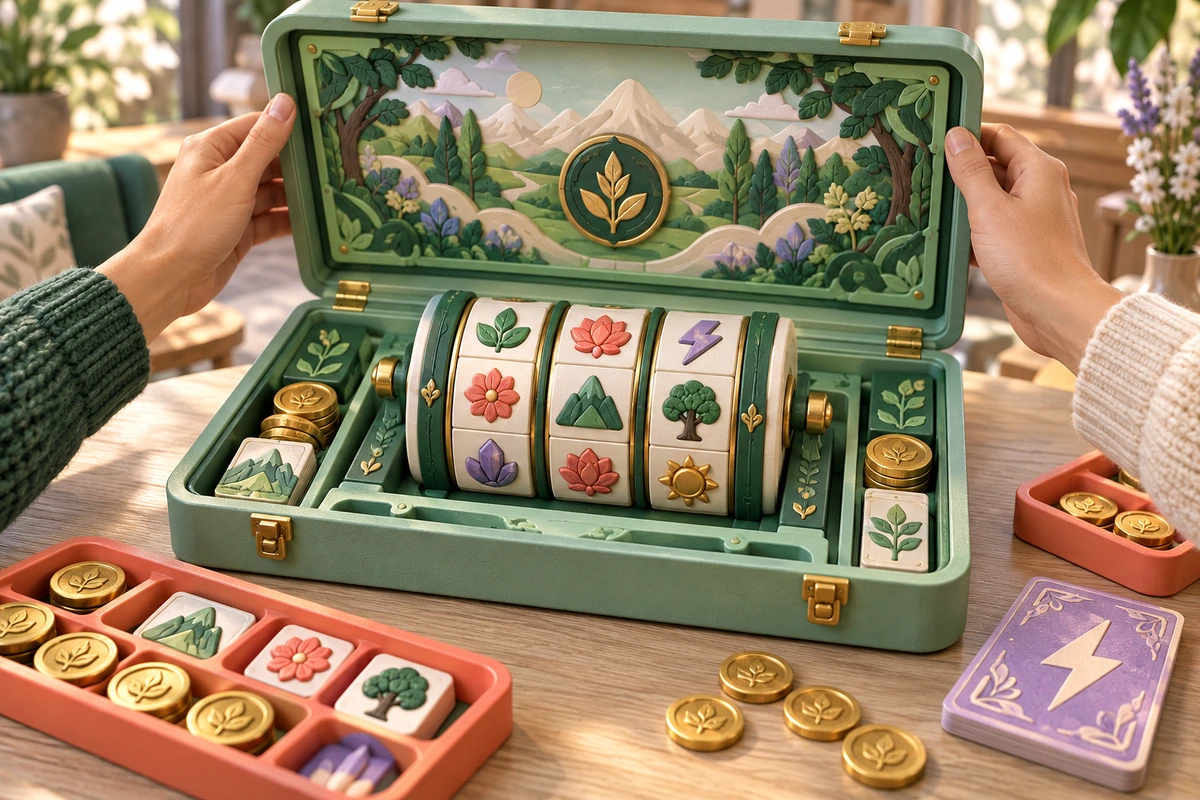
Mint-painted timber, coral trays and lavender cards give the components clear visual roles. Fruit emblems, bells, sevens and stamped coins recall the Coinstrike theme while remaining recognisable pieces within a manual board-game proposal.
The concept is presented as an independent tabletop interpretation. It does not claim that an official boxed Coinstrike game has been released, nor does it offer a manufactured set for sale. The rendered objects show how an imagined edition could feel on a real table.
2The decisions stay in the open
A player deliberately changes one column and chooses one visible pattern. The symbol loop is public, the award is determined by the match and the collection remains available for inspection. The once-per-game card creates a limited choice rather than a hidden outcome.
The practice tray follows six connected turns so you can see a collection develop. It is a learning aid for one person, not an online multiplayer room. The group rules retain clockwise play and a shared board across the full session.
3Explore the parts that interest you
Use the component cabinet to understand what each piece does, the pattern book to read the board or the host notes to organise a group. The score counter checks the final arithmetic without storing a profile or asking for payment details.
Questions are most useful when tied to a specific example. The contact page prepares an email draft so you can name a chapter, describe a move or report a control problem. You review that draft in your own mail application before sending it.