

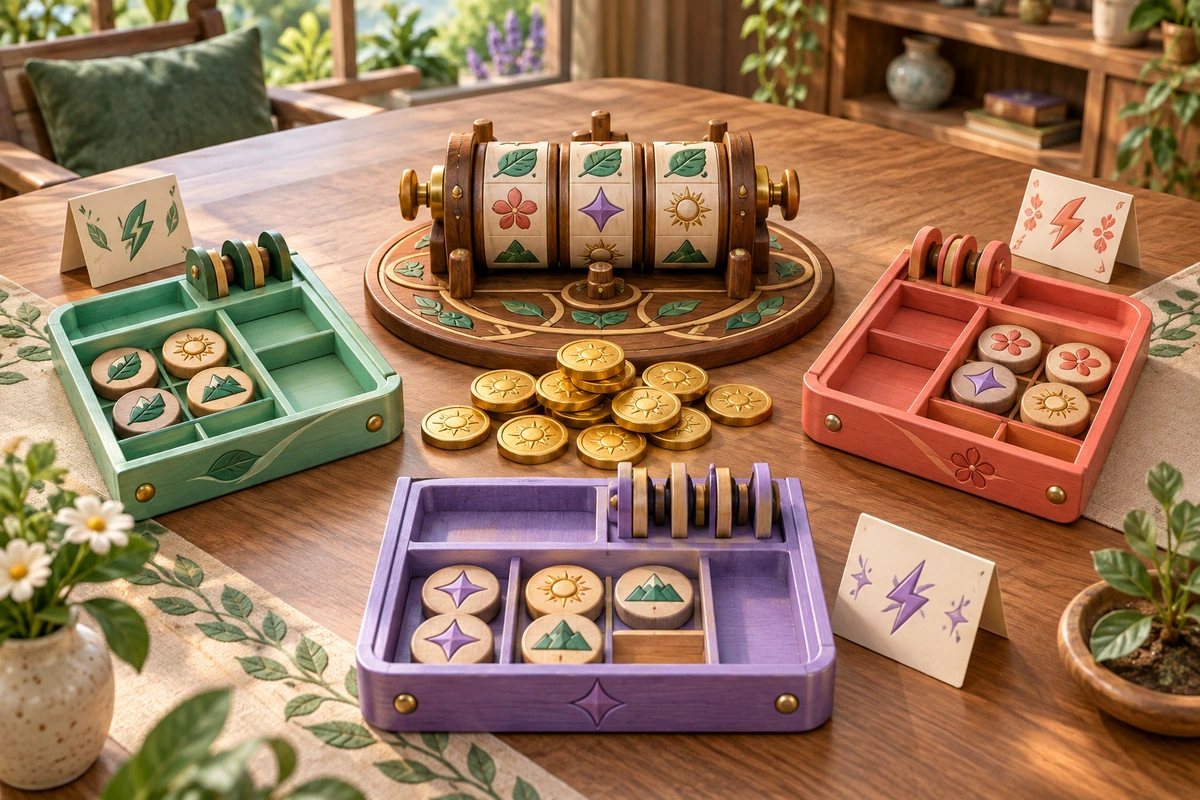
1Arrange access before beginning
Place the shared rack where every seated player can reach it comfortably. Someone who cannot operate a thumb wheel can name a column and direction for another person to move. The choice still belongs to the player whose turn it is.
Keep the common point supply within reach but away from personal collections. Leave enough space for every player to show an unused or spent card. Drinks, rule sheets and phones should not obscure the nine visible symbol windows.
2Make a decision understandable
Invite a learner to say the column, direction and chosen pattern aloud. Another player can point out how the pattern is read without taking over the choice. Distinguish explaining an available option from changing a committed result.
Allow time to compare the rows and diagonals, especially when Strike remains available. The rules do not set a countdown. If your group wants a house limit, agree it before the opening turn and apply the same limit to every seat.
3Finish a round before advancing
A round is complete only after everyone has collected once. The planner shows twelve, eighteen or twenty-four total turns for two, three or four players respectively. In all three cases there are six complete rounds.
After the final collection, sort the trays before comparing totals. Use the same three-part count for every player and keep the pieces visible until a tie, if any, is resolved. The shared game ends there; the next session begins with a fresh opening.