
1Count the immediate awards
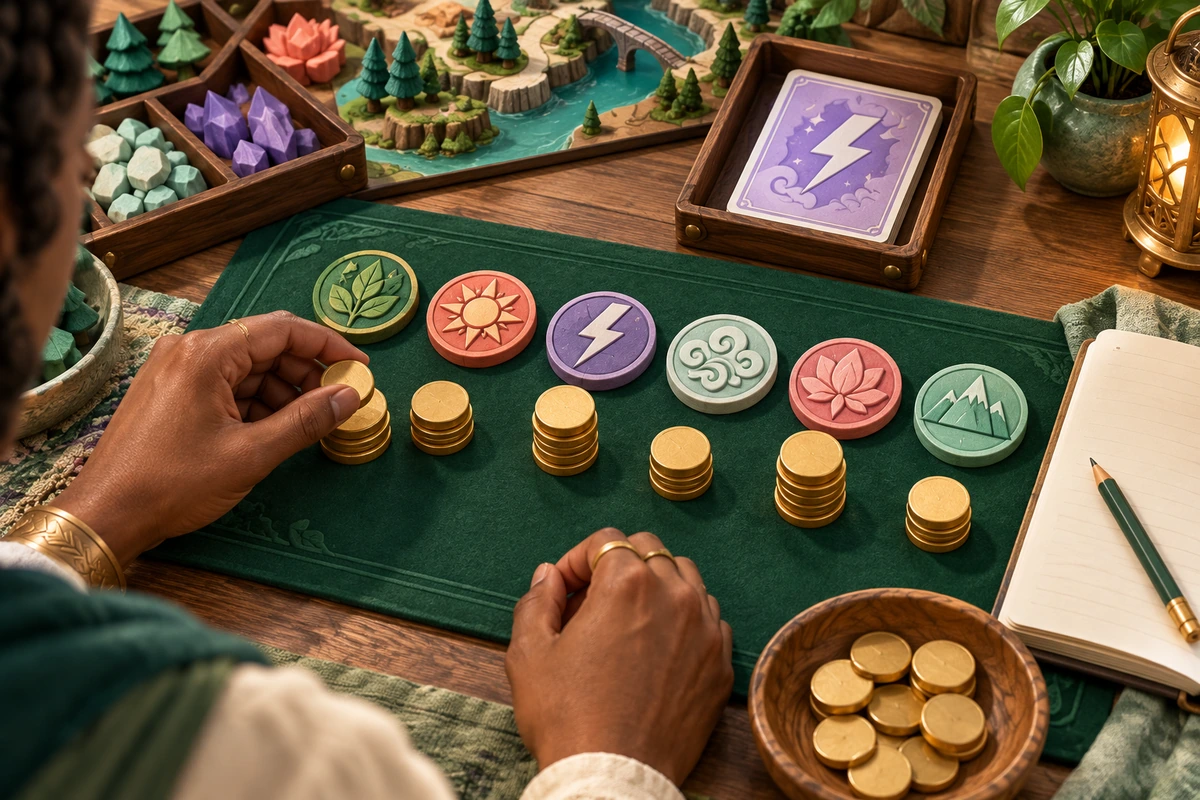
Start with the plain discs collected during turns. Each represents one point, whatever its decorative finish. If you used a paper tally instead, add that tally once; do not count it again alongside physical discs recording the same results.
The board's final position does not receive an extra award. Every player has already collected six results. Keep each person's discs separate until everyone has checked their own total and the game has been settled.
2Group emblems by their identity
Award two points for every different emblem type in the tray. Duplicates do not add more variety. A collection containing Lemon, Lemon, Seven and Coin represents three types and contributes six points.
For example, fourteen point discs with those three types make twenty points. If Strike is still unused, the closing score becomes twenty-one. If it was spent earlier, the total remains twenty; do not subtract the earlier improvement.
3Compare totals without an extra round
The largest final score wins. Equal scores are separated by the number of different emblem types. If the type counts also match, the players share the result rather than extending the game with another random action.
The counter below provides a quick arithmetic check. It accepts whole-number counts within the game's broad limits, but it does not reconstruct a physical match or verify the order in which pieces were collected. Keep the actual tray available if a result needs review.
Check your closing arithmetic.
Use your completed six-turn tray. Inputs are not saved.
14 from discs + 6 from variety + 1 from the card.